The Landmark-Only Trap: What a Route Misses Between Its Highlights
A landmark-only route can miss its most memorable details. Learn how to notice the streets, edges and small changes between famous stops.
What does a landmark-only route leave out? A landmark-only walk may join a castle, a viewpoint and a riverside path with a neat line, while the ground between them disappears into blank space. That stretch can change from a lane to a workshop row, or from rooftops to open riverbank, before you reach the next famous stop.
Named places are useful anchors, especially on a first visit or a day with limited time. But a route is more than its stops. You can keep the destination clear and still pay attention to the streets, paths and boundaries that connect it to the rest of the place.
Three route styles
These approaches give the day different shapes. Choose one that suits your time, company and appetite for uncertainty.
- The highlight route: Choose a few named places, such as a harbour, ruined abbey or hilltop view, and follow a straightforward connection between them. This suits a first visit, a tight schedule or a group that prefers clear destinations. The trade-off is that connecting streets can feel like corridors.
- The wandering route: Start in a broad area rather than fixing every stop. Follow public paths and streets, then turn back when the outing feels complete. This suits a return visit or a day led by curiosity. It requires you to keep track of your route and leave room to retrace your way.
- The paired route: Choose a destination, then pay attention to one feature along the way, such as changing paving or the point where houses give way to fields. This works for a mixed group because the endpoint stays clear while the walk has something to notice beyond arrival.
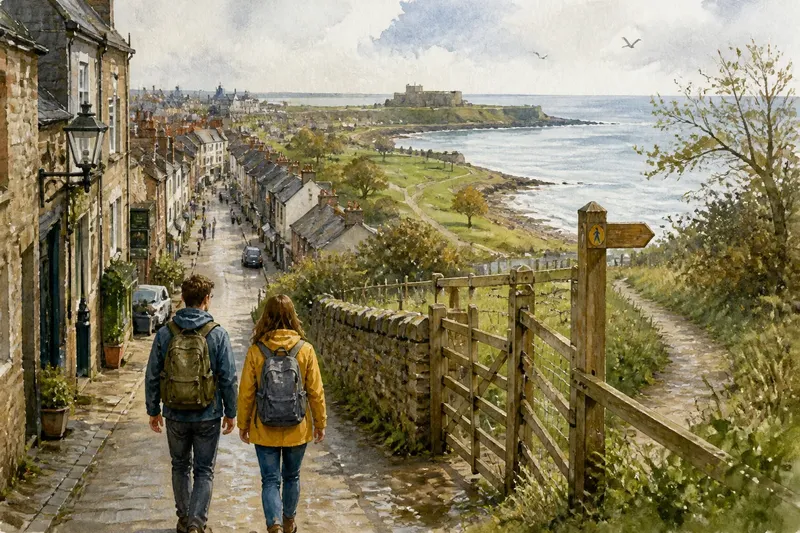
Say you and a friend are walking from a station to a coastal fort. Your friend wants a clear destination, and you want to notice more than the shortest way there. You check a local map and choose a public path through the high street and past workshops, keeping the fort as the endpoint. Along the way, you notice where the buildings thin out and the shore opens up; the route still has a clear purpose, but its changing surroundings become part of the outing.
Reading the in-between
Transitions often have no names on a visitor map, yet they can show how a place fits together. Listen for traffic fading near a park. Notice a shopfront street becoming residential, or a firm path giving way to softer ground at a field’s edge.
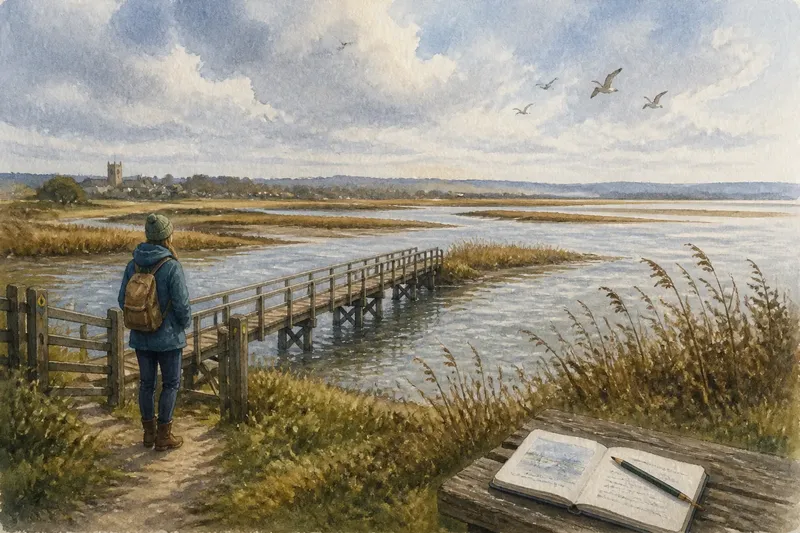
Boundaries offer useful clues too. A canal towpath may meet back gardens; the last houses in a village may face open fields; woodland may border a road. Look for gates, changes in the path and signs of muddy ground, while respecting private property, wildlife and residents’ routines.
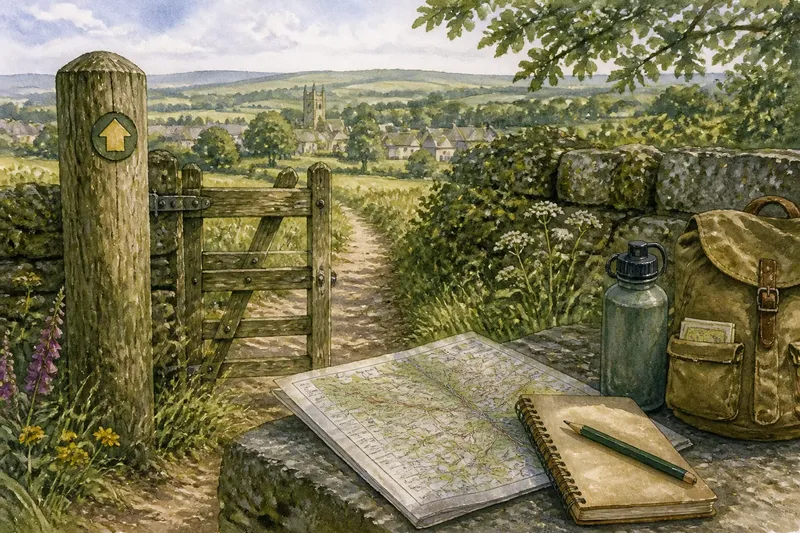
Small details can distinguish one stretch from another without turning the walk into a hunt. A waymarker, the smell of bread near a bakery, gulls above rooftops or rain-darkened paving can stay in your memory. One detail is enough; there is no need to collect or photograph everything.
Choosing a route?
How do I choose a route for a first visit?
Pick one recognisable landmark and a clearly mapped, accessible approach rather than trying to visit every nearby attraction. A simple question about the way there, such as where the town meets the water, can make the walk feel specific without complicating the plan.
What should I notice between landmarks?
Look for changes in sound, surface, building type and vegetation, especially where one setting meets another. These details can help you understand how streets, paths and open spaces connect.
How can I wander without losing the plan?
Keep a known destination or return point, and stay within an area you can comfortably retrace. Check a current local map before setting out, and account for weather, daylight and the needs of anyone walking with you.
Small route adjustments
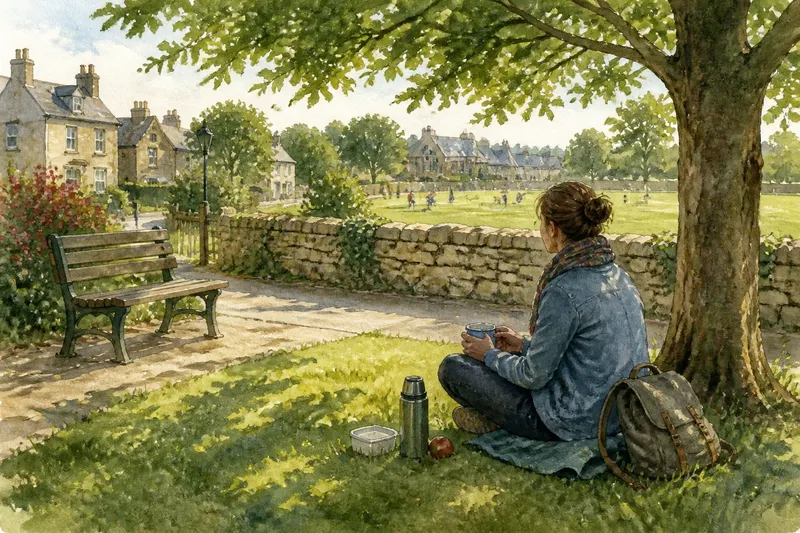
If you usually plan every stop, loosen one connection. Instead of choosing the shortest-looking line between a station and a museum, take a public street past a market, green or older part of the settlement. You need not stop at each one; they simply give the route more texture.
If you tend to wander until the day loses shape, choose one landmark as a loose centre rather than a strict appointment. At a clear junction, decide whether to continue, pause or turn back. OS Maps can help you check public paths and your location; a paper local map is another option, particularly where phone signal is patchy. Check current local information, access arrangements and posted signs before setting out.
Imagine you have an afternoon visit to a museum, with a station as your starting point and a public park between the two. You want to arrive on time but would like to avoid treating the walk as dead ground. You check the map, confirm the park path is open, and allow the museum visit to remain the destination. On the way, you notice where the pavement becomes a park path; if time is running short, you stay on the direct route, and if you have room, you pause by the path entrance. The result is a clear plan with a small, optional point of attention.
Let connections count
Famous places can be worthwhile without making the ground between them disposable. A highlight route gives direction; a wandering route leaves more room for discovery. Either way, the connecting stretch can reveal a change in surface, neighbourhood or sound without requiring another destination.
For a landmark-only route, choose an approach that suits your company and available time, then give the in-between stretch one modest focus. The search phrase landmark-only route describes a plan built around named stops, but it need not dictate what you notice on the way. A change in paving, the edge of a neighbourhood or traffic fading behind trees can make the connection feel like part of the outing.