A Bench, a Wall or a Patch of Grass: Choosing Where to Pause
Choosing where to pause outdoors? Match a bench, wall or patch of grass to your time, comfort and view, so a nearby walk gets an easier, more satisfying stop.
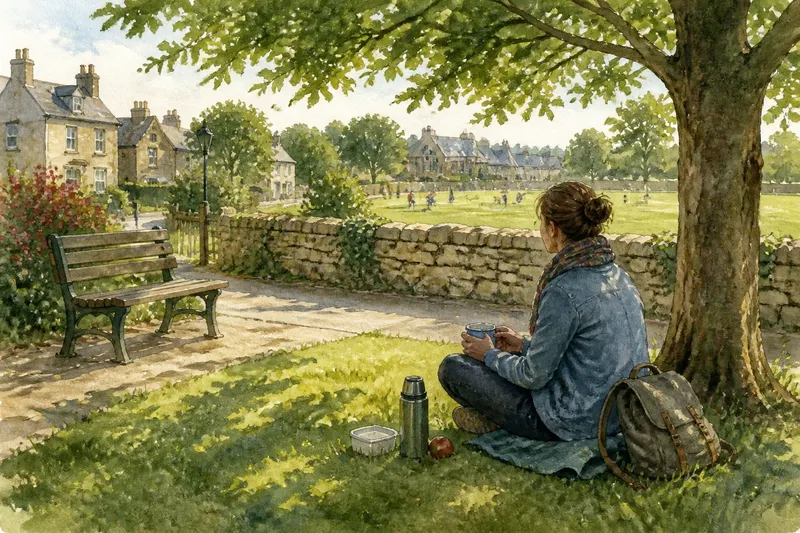
Where can you stop on a local walk without ending up cold, damp or in someone’s way? Choosing where to pause outdoors comes down to the surface, your plans and what you want to notice. A bench suits a proper sit-down; a wall can make a quick perch; grass gives you room to stretch, if the ground is dry and the spot is clear.
Before settling, decide whether you want a brief breather or time to linger. Then check the surface, the route around it and the view from where you would sit. A bus turning at the end of the street can be as absorbing as a distant hillside.
Start with your pause
Ask yourself three things: how long do I want to stop, what would I like to look at, and what will make me comfortable? The answers can change as you walk. A bench that looks inviting from the path may face a draught, while a plain seat might be beside water or birdsong.
For a short rest, favour a place that is easy to approach and leave. If you want to eat or watch the scene unfold, give comfort more weight. You might spot a better place further on, or find your first choice occupied. There is no need to make a stop feel like a destination.
Benches for settling
A bench is often the simplest choice for a longer sit. It keeps you off the ground, and some have a backrest. In a park, churchyard or public garden, its position may frame a pond, a stand of trees or people moving along a path.
Check the seat before you settle. Damp boards, cold metal, grit or a position close to a busy route can make a pause less comfortable. A folded scarf may soften a hard surface, but it cannot change the weather. If the bench is exposed or awkward to leave, look for another spot.
Choose a bench when you want to sit upright, eat a snack or take in a broad view. For a brief stop, a nearby seat is more useful than one that requires a detour. For a longer pause, support and a little distance from passing traffic may matter more than the view.
Walls for a quick perch
A low wall can suit a short stop: you can check a map, watch clouds move over rooftops or wait for a companion to catch up. In a village lane or old park, it may also give you a view over a hedge or across a green.
Walls are not designed as seats. Their tops can be narrow, rough, sloping or cold, with nowhere to lean back. Check that the surface looks stable and that you can sit down and rise without awkwardness. Keep clear of gates, paths and entrances; a useful perch should not become an obstacle.
A wall works best if you are happy to sit upright and keep your belongings close. If the stone feels damp or uncomfortable, keep walking rather than forcing the pause.
Grass for stretching
Grass gives you room to change position. You can sit cross-legged, lean against a tree or spread out a picnic cloth. A gentle slope may open a view across a common or playing field; a sheltered corner can offer a quieter look at leaves, insects or shifting light.
Check the ground before sitting. Grass can be wet, muddy, uneven or scattered with small sticks, even on a bright day. A sit mat or old waterproof jacket gives you a barrier; a cloth makes a cleaner place for a snack. Without either, look for dry ground instead of assuming every green patch is comfortable.
Choose grass when you have time to linger, want to stretch your legs or plan to share food. It is less convenient if you need to move on quickly, dislike sitting low or have somewhere smart to be afterwards. Stay clear of marked paths and leave room for other visitors.
Check the conditions
Weather and clothing can change the choice. On a breezy day, a sheltered bench may feel better than an exposed wall. After rain, a dry wall may beat a damp bench or soft lawn. In warm sun, shade can make grass appealing; in cool weather, sitting close to the ground may leave you chilly.
Consider what you are carrying. A flask and snack are easier to enjoy on a bench or a broad, clean wall than on uneven ground. A small sit mat makes grass more practical without turning a casual walk into a picnic outing. Keep a walking pole beside you, not across a route where someone could trip.
Access matters, too. A bench beside a firm, level path may be easier to reach and rise from than a grassy bank. Follow site signs and local rules, and take your rubbish with you. Choose a spot that suits both you and the place.
Choose by time and view
For a moment’s rest, pick a place you can leave easily. A nearby bench or clear section of wall is often more practical than settling on the ground. For a longer pause, a bench offers support, grass lets you shift position, and a wall suits an upright perch.
Let the view shape your stop. A broad outlook might invite a quiet sit, but a small detail can hold your attention just as well: ivy threading through stone, ripples under a footbridge or the changing sound of a school playing field. Pick somewhere where you can notice it without craning your neck or dodging foot traffic.
Say you reach a neighbourhood green with a little time before heading home. The bench faces a busy road, the wall is damp, and a dry patch of grass sits under a tree beside the path. You spread a folded jacket on the grass, watch the leaves move and stand when you are ready. If the ground feels cold, you switch to the bench, accepting the noisier view for a more comfortable seat.
Which pause fits?
Which spot suits a short stop?
A nearby bench or broad, dry wall is usually simplest when you want to rest briefly and move on. Choose one that is easy to approach without narrowing a path or blocking an entrance.
What should I sit on after rain?
Check the surface rather than judging by the sky. A dry wall may be better than a wet bench or soft ground; a sit mat can help if the grass is firm and only slightly damp.
How do I choose a place with a good view?
Decide what you would enjoy looking at, then check whether you can see it comfortably from the spot. A nearby tree, pond or lively path may be more rewarding than a distant view that leaves you facing a draught.
Can I stop on a wall beside a path?
Only if the wall looks stable and you can sit without obstructing people, access points or the route itself. If you are unsure about the surface or your balance, choose a bench or keep walking.
Make the choice
Choosing where to pause outdoors need not mean searching for a perfect seat. Check how long you want to stay, whether the surface is comfortable and whether other people can pass freely. Then choose the bench, wall or patch of grass that fits the moment.
Before you set off again, notice what held your attention: the curve of a path, a bird settling on a rail or shade shifting across the grass. That small detail can give the rest of your walk a direction, even if you only stopped for a moment.