The One-Reason Outing: Why a Clear Purpose Can Make a Day Feel Spacious
A one-reason outing gives your day a clear focus without filling every hour, so you can notice more nearby and still change course when the day calls for it.
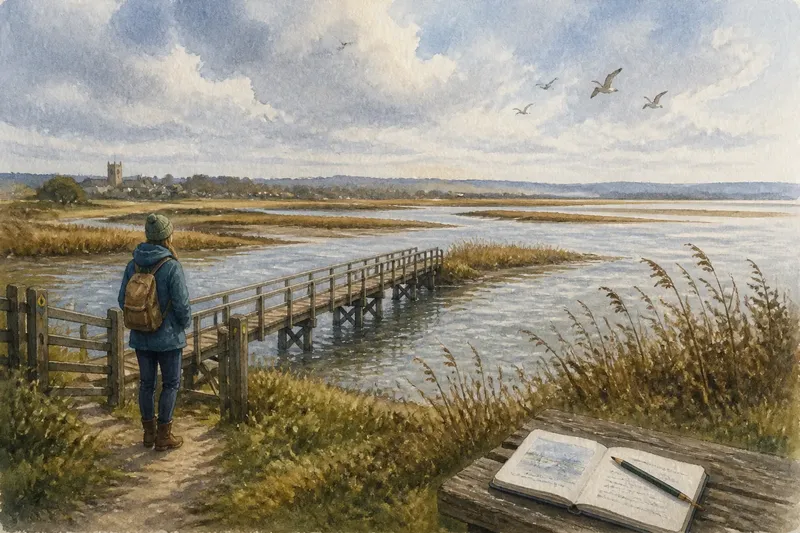
What would make a nearby outing feel worth leaving home for, without turning it into a timetable? A one-reason outing begins with one thing you want to see, hear or visit: the estuary at high tide, a town’s church bells or an old orchard marked on a local map. The point is to notice that particular thing, not to build a full day around it.
Say you live near a market town and have a free Saturday morning. Your chosen subject is the tide reaching a footbridge at the edge of the marsh. You check a tide table and a local path notice, then set off with enough time to arrive comfortably. You have not assigned the morning a café, a circuit or a precise return time. The water is what you came to notice; everything else can remain a possibility.
Choose a clear subject
A good subject is specific enough to direct your attention, but simple enough to notice without special equipment or a complicated plan. “Get some fresh air” may not help you choose a place. “See the stream beside the village green after rain” gives you a destination and something to look for.
Try a small, observable subject such as:
- The first signs of spring in a familiar patch of woodland.
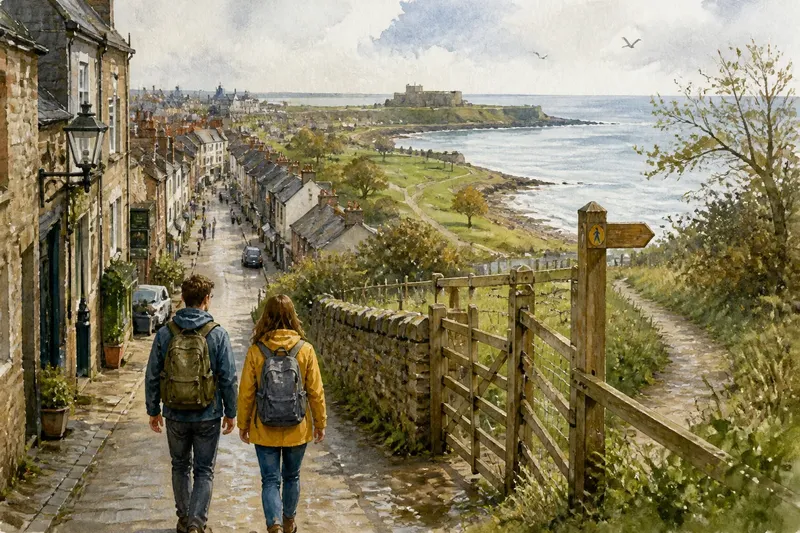
- A village green you usually pass on the bus.
- The sound of a stream, if recent rain and local conditions make the path suitable.
- The changing light across a harbour or open field.
None needs to be rare or impressive. A familiar place can hold your attention differently when you arrive looking for something particular. You are not collecting an achievement; you are giving yourself a reason to look closely.
Make a simple field note
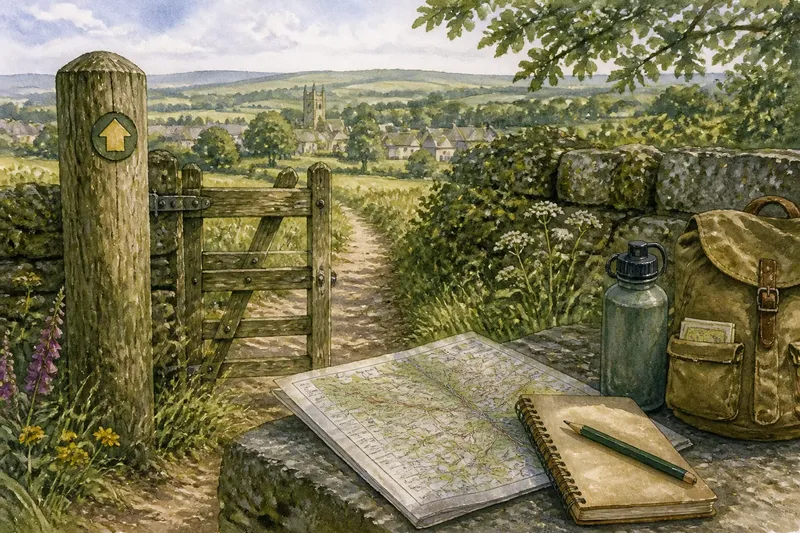
Instead of extending the outing with more destinations, carry a pocket notebook and jot down one detail connected to your subject. Note the direction of the wind, the colour of the water or which birds you can hear. A phone note works just as well if you prefer not to carry anything.
Keep the note descriptive rather than turning it into a task. “The reeds are bent towards the bridge” is enough; there is no need to identify every plant or explain why it looks that way. If you are curious, you can look up a name later using a local nature guide or an app such as iNaturalist, while treating an uncertain identification as a possibility rather than a fact.
Leave room for the place
For the marsh visit, you might arrive at the footbridge and watch the water approach. Reeds shift along the bank; gulls wheel above the mudflats. On the way back, an allotment path catches your eye. You follow it briefly, then turn towards the bus stop as the sky darkens. The extra moment came from noticing what was there, not from adding another stop to the plan.
Leaving room does not mean you have to be spontaneous. Going straight home after seeing the tide is a complete outing. If the bridge is closed, check whether an accessible public viewpoint offers the same view; if not, postpone or head home. You do not owe the day a replacement attraction.
Keep access straightforward
Before setting out, check the local path notice and forecast, and bring what suits the route, such as a waterproof layer, water and a charged phone. For a tide-focused visit, consult a current tide table and follow signs and local access guidance. If conditions or access are unclear, choose another place or leave the visit for another day.
A simple journey plan can help too. Check how you will get there and what return options are available, whether that means a familiar path, a bus stop or a lift. Keep these details practical rather than turning them into a sequence of events.
Questions about one-reason outings?
What counts as one reason?
Choose one main subject you can name plainly, such as a particular view, sound or local place. Other things may catch your eye, but they do not need to become additional destinations.
Do you need to plan a route?
Plan enough to reach the place sensibly and know how you can return. A familiar path or simple out-and-back can leave attention free for what you came to notice.
What if the subject is unavailable?
Ask whether a nearby accessible spot still lets you notice the same thing. If the answer is no, postponing or going home is a reasonable choice.
Can the reason simply be to get outside?
Yes, if that gives you enough direction to choose a place and start. You could visit a nearby green space and note one detail about the weather or season.
Carry one detail home
After the marsh outing, you might find that a short note about the reeds or the tide is more memorable than a list of stops. The note does not need to be clever or complete; its job is to bring one observed detail back into the rest of your day.
For your next one-reason outing, choose a subject you can recognise when you encounter it. Check the access and travel details that matter, then leave space to notice what the place offers. A pocket notebook, a phone note or simply a moment of attention can make a nearby place feel distinct without asking the day to become an itinerary.